If you run regularly, you may recognise this.
Your calf starts to tighten halfway through a run.
Your knee feels uncomfortable the next day.
Your hips feel stiff after longer distances, even though you have stretched and rested.
For many runners, these small niggles are easy to brush off at first. It is common to assume they will settle on their own. Sometimes they do. But when the same tightness or discomfort keeps coming back, it is often a sign that your body needs a little more support.
Sports massage can be a helpful part of that support. It can ease muscle tension, help recovery, and make movement feel more comfortable. At the same time, some running niggles need a wider look at what is causing them in the first place.
This article explains when sports massage may help runners, when an initial assessment may be the better place to start, and why recurring running niggles are often worth paying attention to.
Quick answer
Sports massage can help runners by easing muscle tension, supporting recovery, and improving comfort after training.
If the same pain or tightness keeps returning, an initial assessment may be more helpful because it can look at the underlying cause, not just the area that feels sore.
You might recognise this if you run regularly
Many runners experience:
- tight calves that return every week
- knee discomfort that appears during or after a run
- stiff hips after longer distances
- an ache that settles with rest, then comes back again
- a feeling that one area is always working harder than it should
This pattern is very common, especially in active people who want to keep going and tend to self manage for a while before seeking help. That recognition based approach is one of the strongest ways to connect with the clinic’s audience, especially runners and people living with recurring niggles.
Why running niggles often keep coming back
Running is repetitive. Every step places load through the feet, ankles, knees, hips and lower back.
Over time, small changes can build up.
That might be because of:
- an increase in mileage
- more hill work or speed sessions
- not enough recovery between runs
- reduced mobility in the hips or ankles
- strength imbalances
- the body compensating somewhere else in the movement chain
This is often why a niggle seems to disappear, then return a few days or weeks later.
The discomfort may show up in the calf or knee, but the reason behind it is not always in that exact spot.
That is one reason why stretching alone does not always solve the problem.
If your discomfort is centred around the knee, you may also find this useful: Persistent Knee Pain When Running: Why It Keeps Coming Back
What sports massage actually helps with
Sports massage is not simply about using deep pressure. For runners, it is usually most helpful as a recovery and support tool.
It can help with:
Muscle tension
Running can leave certain muscles working harder than others, especially the calves, quads, hamstrings and hips. Sports massage can help reduce built up tension in these areas.
Recovery between runs
Massage supports circulation and can help the body recover more comfortably after training.
Mobility and ease of movement
When tight muscles begin to relax, movement often feels easier and less restricted.
Ongoing maintenance during training blocks
Some runners find sports massage helpful during heavier periods of training, before events, or when they notice tension gradually building.
When sports massage may be a good fit
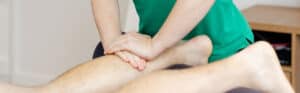
Sports massage may be a good option if:
- you feel generally tight after running
- your muscles recover slowly after harder sessions
- you are training for an event and want support during the build up
- you notice recurring tightness, but not ongoing pain
- you want help managing the physical load of regular running
For many runners, it works best as part of a wider recovery routine alongside rest, strength work, mobility and sensible training progression.
You can also explore the clinic’s Sports Massage treatment option here:
When an initial assessment may be the better place to start
If something keeps coming back, there is often a reason. An initial assessment may be more helpful if:
- the same pain returns every few weeks
- you are changing how you run because of discomfort
- your distance or pace is affected
- rest helps temporarily, but the problem returns
- you are unsure whether sports massage or another treatment is the right fit
An assessment looks at the bigger picture.
That may include:
- how you move
- how your joints are functioning
- whether certain muscles are compensating
- whether training load is playing a part
- what may be contributing to the issue returning
This reflects the clinic’s wider approach of helping people understand the root cause of recurring discomfort, rather than simply chasing symptoms.
If you are unsure where to start, this is usually the most helpful first step, and we often advise everybody start here anyway so we can really make a thorough assessment and consider the best course for you specifically and create a plan.
Why runners often need both recovery support and a bigger picture view
Sometimes sports massage is enough. Sometimes it is not.
That does not mean massage is not helpful. It simply means the body may be asking for support in more than one way.
A combined approach can often work well.
– Sports massage to ease tension and support recovery.
– An assessment to understand why the niggle is returning.
– Strength or mobility work to support longer term comfort.
This is often the difference between simply settling a flare up and understanding what your body needs to keep moving well.
Simple ways runners can support recovery themselves
Small habits can make a real difference over time.
Build training gradually
Increasing mileage or intensity too quickly can overload tissues that are still adapting.
Prioritise recovery
Rest days, sleep, hydration and good nutrition all support recovery.
Include strength work
Strength around the hips, glutes and lower legs can support more comfortable running.
Pay attention to repeated signals
If the same area keeps tightening or becoming uncomfortable, it is worth noticing. Small signals are often the body’s way of asking for a little extra support.
You may also find it useful to read guidance from Versus Arthritis on exercise and joint health here.
Supporting runners in Hartley Wintney and the surrounding area
At Body Reset Clinic, we regularly support runners in Hartley Wintney and nearby areas who want to keep doing the activity they enjoy.
Some come in because their calves always tighten during training.
Others simply want to understand why the same issue keeps returning.
Some are managing a niggle ahead of a race.
Sometimes we support runners through their preparation journey towards a race like a marathon, so they may not have a niggle or an injury but we support them in their training and help prevent issues from occurring.
The aim is always to listen carefully, understand what is going on, and guide each person towards the most suitable next step.
For some runners, that may be sports massage.
For others, starting with an assessment gives a clearer picture and a better plan.
That calm, reassuring, supportive approach is central to the clinic’s brand and content style.
–––––––––––––
Frequently asked questions
Is sports massage good for runners?
It can be. Sports massage may help reduce muscle tension, support recovery and improve comfort after training, especially during heavier training periods.
How often should runners get sports massage?
That depends on training load, recovery needs and how your body feels. Some runners book during race training, while others come in when tension begins building.
Can sports massage stop running injuries?
Sports massage can support recovery and help manage tightness, but it cannot guarantee that injuries will not happen. If the same pain keeps returning, it may be worth looking at the underlying cause.
How do I know whether I need sports massage or an assessment?
If you mainly feel general muscle tightness, sports massage may be helpful. If pain keeps returning, affects how you run, or has been going on for a while, an assessment is often the better place to start.
What if I am not sure what to book?
That is completely fine. Many people are not sure which treatment is right for them. Starting with an initial assessment is usually the clearest option if you want help understanding what is going on. Or you can phone up and speak to our friendly reception team, who can guide you.
––––––––––––––––––––
When to seek support
If you are noticing recurring tightness, discomfort during runs, or a niggle that keeps returning, it may be helpful to speak with a therapist.
We have a Targeted Relief Sports Massage lasting 30 minutes, ideal for focus on a specific area of discomfort.
A Focused Reset at 45 minutes, which is a more in-depth session to work through upper or lower body.
Our Full Body Reset option is a full sports massage session. It’s ideal to support overall movement, recovery and relaxation.
If you’re not sure, book an initial physio assessment where a therapist will assess your movement, understand your symptoms, and talk through a personalised plan with you. This kind of booking reassurance is specifically encouraged in the clinic guide because it helps people feel more confident about taking the next step.
If your symptoms are severe or sudden, please contact your GP or emergency services.