
Persistent knee pain when running is one of the most common issues we see in clinic.
If you run regularly, you may have experienced this…
Your knee starts to ache partway through a run.
You rest for a few days, and it settles.
Then, when you return to running, it comes back again.
For many runners, this cycle can feel frustrating and confusing.
It is easy to assume it is just overuse, or something that needs more stretching or rest.
Sometimes that helps temporarily. But when knee pain keeps returning, there is usually a reason behind it.
This article explains why knee pain when running often comes back, what may be contributing to it, and when it may help to take a closer look.
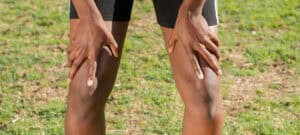
Quick answer
Knee pain when running often comes back because the underlying cause has not been addressed.
This may relate to movement patterns, strength, mobility, or training load, rather than just the knee itself.
You might recognise this pattern
Many runners notice:
- knee pain that appears during or after running
- discomfort that settles with rest, then returns
- stiffness when going up or down stairs
- needing to reduce distance or pace
- one knee feeling different to the other
This is very common, especially in active people who try to manage symptoms themselves before seeking help.
Why knee pain when running often keeps coming back
Running is repetitive, and the knee sits between the hip and the ankle.
That means it often absorbs load from both directions.
When something is not working as well as it could elsewhere, the knee often feels it.
Common contributing factors include:
Movement patterns
If the body is compensating during running, certain areas may be under more strain.
Strength imbalances
Weakness in the hips or glutes can change how load moves through the knee.
Limited mobility
Restricted movement in the ankle or hip can affect how the knee functions.
Training load
Increasing mileage, intensity or frequency too quickly can overload tissues.
Previous injury
Old injuries can sometimes change how the body moves without you realising.
This is why knee pain can settle, then return once you start running again.
Why rest alone does not always solve it
Rest can reduce symptoms.
But it does not always change the reason the pain developed in the first place.
That is why many runners find the pain disappears during rest, it returns once running resumes and the cycle repeats.
This can be frustrating, especially when you feel like you are doing the right things.
Understanding the cause can make a big difference to breaking that cycle.
It is not always just the knee
One of the most important things to understand is that knee pain is not always caused by the knee itself.
It is often influenced by:
- hip strength and control
- ankle mobility
- how the foot interacts with the ground
- overall running mechanics
This is why focusing only on the painful area does not always lead to lasting improvement.
When knee pain may need a closer look
You may want to consider getting your knee checked if:
- the pain keeps returning when you run
- it affects your distance or performance
- you are changing how you move because of discomfort
- it has been ongoing for several weeks
- you are unsure what is causing it
These are often signs that the body would benefit from a more detailed look.
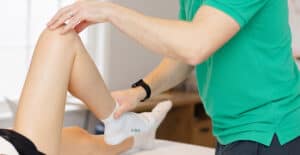
What an initial assessment looks at
An initial physio assessment is designed to understand the bigger picture.
This may include:
- how you move when walking or running
- how your joints are functioning
- strength and control around the hips and legs
- areas of tightness or restriction
- how your training load may be affecting you
The aim is to understand what may be contributing to the issue, so you can move forward with a clearer plan.
Where sports massage can still play a role
Sports massage can still be helpful for runners with knee pain.
It may support:
- reducing muscle tension
- improving recovery between runs
- easing tightness in surrounding muscles
However, if the same pain keeps returning, it is often most helpful when combined with a better understanding of the underlying cause.
Simple ways to support your knees when running
Some small changes can support your body over time.
Build training gradually
Avoid large increases in mileage or intensity.
Include strength work
Strength around the hips, glutes and legs can support better movement.
Keep mobility balanced
Maintaining movement in the hips and ankles can reduce unnecessary strain.
Pay attention to early signs
Recurring discomfort is often a signal worth noticing.
(For general guidance on exercise and joint care, the NHS provides helpful advice here)
Supporting you as a runner in Hartley Wintney and surrounding areas
At Body Reset Clinic, we regularly support runners in Hartley Wintney and nearby areas who are dealing with recurring knee pain.
Some come in because their knee pain keeps returning after rest.
Others want to understand what is happening before it becomes more limiting.
The focus is always on understanding the individual and helping them move forward with confidence.
That supportive and personalised approach reflects how the clinic aims to care for its clients.
_____________
Frequently asked questions
Why does my knee hurt when I run?
It can be linked to how your body moves, strength and mobility, or training load, not just the knee itself.
Should I stop running if my knee hurts?
Not always. It depends on the cause and severity. Some runners can continue with adjustments, while others may benefit from a short period of reduced load.
Can knee pain go away on its own?
Sometimes it can settle with rest. However, if it keeps returning, it may help to understand what is contributing to it.
How do I know if I need an assessment?
If the pain keeps coming back, affects your running, or has been ongoing for a few weeks, it may be helpful to get it checked.
When to seek support
If you are experiencing knee pain that keeps returning when you run, it may be helpful to speak with a therapist.
Your first appointment (initial physiotherapy assessment) usually lasts around 45 minutes. During this time, your therapist will assess your movement, understand your symptoms, and talk through a personalised plan with you. This kind of reassurance helps people feel more confident taking the next step.
You can book an initial assessment for a knee issue here
If your symptoms are severe or sudden, please contact your GP or emergency services.